
Blog
Blog
Codex builds itself: what does this mean for businesses?
For decades, technological development followed a clear pattern. Humans wrote code. Systems executed it. Artificial intelligence c
Companies without Digital Workers in 2030?
For years, the adoption of artificial intelligence has been a technological decision. Pilot projects. One-off automations.
Digital Workers for eCommerce: scale without losing control
eCommerce moves at high speed. Constant orders. Immediate customer service. Stock management. Active campaigns. Tight margins.
Digital Workers for Industry: Strengthening Operations Without Increasing Complexity
Industry has always operated in highly demanding environments. Production planning. Cost control. Quality. Maintenance. Coordinati
Digital Workers for Logistics: Transforming Operations
Logistics is one of the environments with the highest operational complexity. Multiple suppliers. Changing routes. Continuous inci
Digital Workers for professional services: increasing capacity without losing standards
Professional services rely on something very specific. Knowledge. Analysis. Expert judgment.
Digital Workers for Telecommunications: Managing Complexity at Scale
The telecommunications sector operates in one of the most complex environments in the digital economy. Critical technical infrastr
Do you want to grow but don't want to expand your structure?
Many companies reach a point where a clear tension emerges. They want to grow. But they do not want to increase their structure.
La empresa como sistema vivo de inteligencia
For decades, the company has been understood as a hierarchical structure. Departments. Processes. Well-defined functions.
The breakdown of sales teams: meetings, CRM, and follow-up
Many sales teams do not have a talent or market problem. They have an operational capacity problem.
The call center of the future: from 400 people to 40 hybrid teams
For years, the call center model was simple: More call volume → more people. But this approach is beginning to show its limits:
The era of hybrid organizations
For decades, technology has been a support for companies. Tools to store information. Systems to automate processes. Platforms to
The hidden cost of not automating
When a company analyzes automation, the common question is direct: How much does it cost to implement? But rarely is the other sid
The next industrial revolution will be cognitive.
Previous industrial revolutions transformed the way we use physical force and organize production. First, we mechanized work. Then
When your ERP becomes a bottleneck
The ERP is one of the core systems of any company. It manages orders. Customers. Invoicing. Inventory. A large part of operational
Corporate memory in AI environments
One of the most significant transformations introduced by Artificial Intelligence in business is not just automation, but knowledg
Digital Worker Customer Service 24/7: How does it work?
A 24/7 Customer Service Digital Worker is a digital worker designed to handle enquiries, manage requests and provide continuous su
Digital Worker FAE Technical: Intelligent support for technical teams
A Technical FAE (Field Application Engineer) Digital Worker is a digital worker designed to support technical teams and FAE profil
Digital Worker for Management: Automated Executive Reports
A Digital Worker for Management is a digital worker designed to transform operational data into clear, structured, and actionable
How do we design a Digital Worker from scratch? (Methodology)
Designing a Digital Worker is not about installing technology. It is about creating real operational capability within the organiz
Infrastructure vs. AI “toys”
In many organizations, the adoption of Artificial Intelligence begins with isolated tests: one tool to generate text, another to s
Internal Sales Digital Worker: What exactly does this do?
An Internal Sales Digital Worker is a digital worker designed to support the sales team from within the organization. It is not a
Regulatory compliance in AI: what CEOs need to know
What the EU AI Act requires from management: risk classification, governance with real human oversight (human-in-the-loop), transp
The big mistake: relying solely on prompts
In many companies, the entry into Artificial Intelligence begins with something apparently simple: opening a chat and writing a pr
Who controls AI within the company?
One of the most common questions when an organization begins to incorporate Artificial Intelligence is clear: who is really in con

What is nodus OS?
In recent years, the word “AI” has been associated with chatbots, point automation, and internal pilot tests. Many companies have

Digital Workers, The new structural capital of the company
When we think of corporate capital, we think of: But there is a new type of emerging capital: Structured Cognitive Capital.

How to measure the real ROI of a Digital Worker
The question isn’t whether AI works. The question is: does it truly impact the bottom line?

Hybrid companies: when people and AI work together
For more than a century, companies have operated with a single type of productive agent: the person. People who analyze. People wh
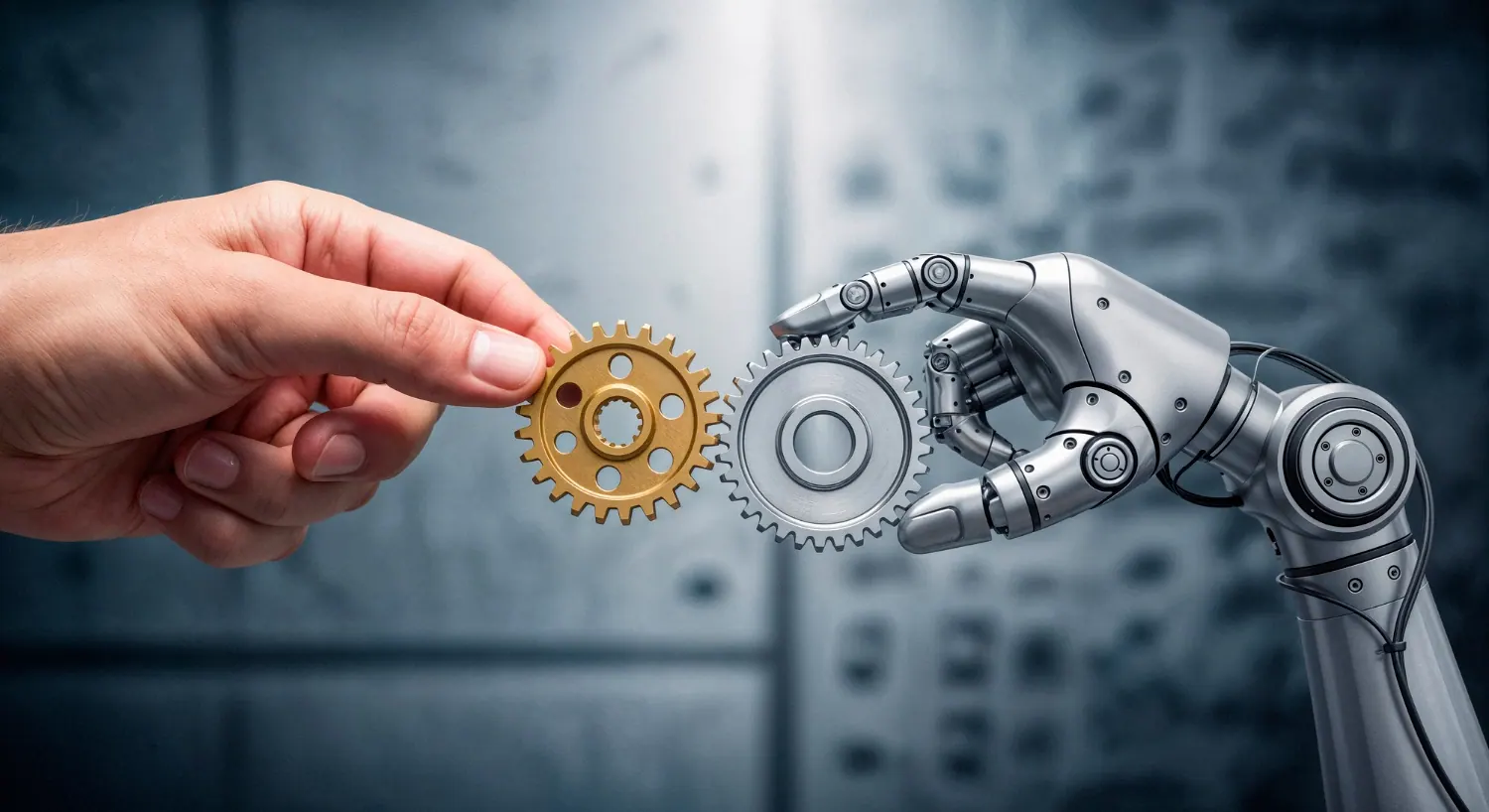
Orchestration vs Automation
For years, companies have been automating processes. Sending automatic invoices. Generating alerts. Assigning tasks if a specific

What is a Digital Worker and why is it not just AI?
Most executives have tried AI. They’ve written a prompt. They’ve generated a text. They’ve asked for a summary. And often the conc

The big mistake: leaving AI in scattered hands within the company
Most companies don’t have a problem with AI. They have a problem with how they are introducing it. The pattern repeats itself: